







Your racing mind isn’t a flaw—it’s your brain’s stress response working overtime. You can calm it with a few simple techniques: try the 4-7-8 breathing method, ground yourself using the 5-4-3-2-1 senses exercise, or move your body with a brisk walk to metabolize stress hormones. Writing down your worries also frees up mental space. Each of these approaches works differently, and exploring them further will help you find what quiets your mind best.
Why Your Mind Won’t Stop Racing

When your mind races and you can’t seem to hit the brakes, it’s usually your brain’s stress response doing what it thinks is its job—keeping you safe. This system speeds up your thinking to handle perceived threats, but when it stays activated, you’re left overanalyzing, catastrophizing, and looping through worst-case scenarios. How to stop overthinking is essential for achieving mental clarity. By recognizing when your thoughts spiral out of control, you can employ techniques to calm your mind.
Anxiety is the most common driver. Your mind fixates on what could go wrong, and that spiral feeds itself—more thoughts create more anxiety, which generates even more thoughts. Sleep deprivation, ADHD, and certain medications can intensify this pattern further. Why you can’t stop overthinking can lead to a cycle that’s difficult to break. It’s essential to identify triggers and practice mindfulness to regain control of your thoughts. Developing healthier coping mechanisms can significantly reduce the impact of overthinking on your daily life.
The good news? Understanding why it happens is your first step. Mental health professionals may refer to these rapid thought patterns as flight of ideas, which is commonly associated with bipolar disorder during manic or hypomanic episodes. From here, you can apply simple stress relief techniques your mind actually responds to.
Breathe Deep to Quiet a Racing Mind
When your mind won’t stop spinning, your breath is the most immediate tool you have to shift gears. The 4-7-8 method works by extending your exhale well beyond your inhale, which activates your body’s built-in relaxation response and pulls you out of fight-or-flight mode. You breathe in quietly through your nose for 4 counts, hold for 7 counts, then exhale forcefully through pursed lips for 8 counts with an audible “whoosh” sound. This kind of slow, deliberate breathing increases vagal tone, which supports deeper relaxation and reduces the nighttime alertness that keeps your thoughts racing.
The 4-7-8 Method
Though a racing mind can feel relentless, one of the simplest ways to interrupt it is through your breath. The 4-7-8 method works by activating your parasympathetic nervous system, shifting your body away from fight-or-flight mode. It’s one of the most accessible breathing exercises for anxiety thoughts. This technique is a form of pranayama, a breathwork tradition commonly used in yoga practices.
Here’s how to practice it: sit comfortably, place your tongue behind your upper front teeth, and exhale completely. Inhale through your nose for four seconds, hold for seven, then exhale through pursed lips for eight seconds, making a “whoosh” sound. Repeat up to four cycles.
If you feel lightheaded, shorten the counts while keeping the ratio. With consistent daily practice, you’ll notice a calmer mind within days or weeks.
Triggering Relaxation Response
The 4-7-8 method is a powerful starting point, but it’s just one way your breath can work for you. Deep, slow breathing activates your body’s relaxation response by calming the nervous system directly. You don’t need special training—just willingness and a few quiet minutes.
Here are three approaches to calm your thoughts naturally:
| Technique | How It Works | Best For |
|---|---|---|
| Diaphragmatic Breathing | Slow, deep belly breaths signal safety to your body | Daily wind-down |
| Box Breathing | Equal counts for inhale, hold, exhale, hold | Acute stress moments |
| Alternate Nostril Breathing | Switching nostrils engages parasympathetic response | Deeper practice sessions |
Start with whichever feels most accessible. Your breath is always available to you.
Ground Yourself With the 5-4-3-2-1 Method
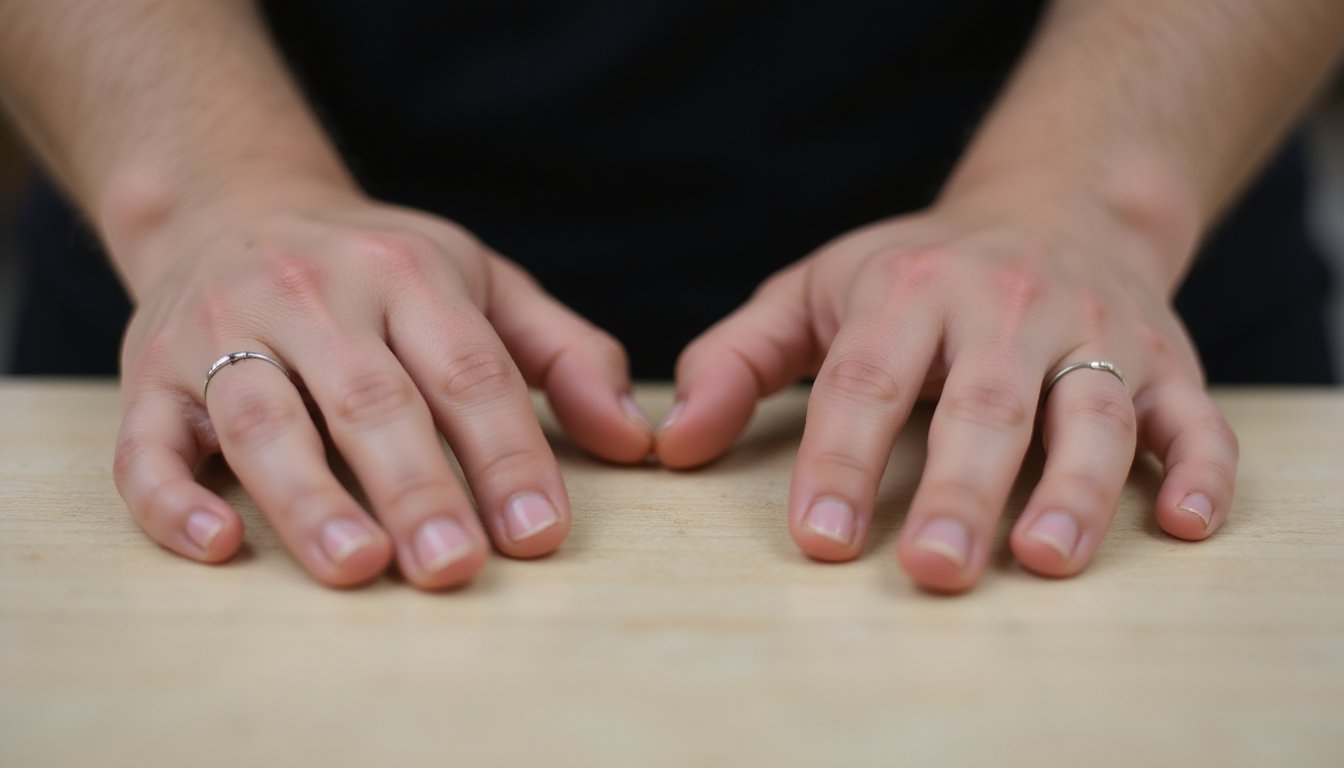
When your mind won’t stop racing, the 5-4-3-2-1 method gives you a simple way to engage your five senses and bring your attention back to what’s right in front of you. By noticing what you can see, touch, hear, smell, and taste, you activate the rational part of your brain and override your body’s stress response. This gentle practice anchors you in the present moment, reminding your nervous system that you’re safe right now.
Engage Your Five Senses
How do you slow a racing mind when thoughts seem to pile on faster than you can process them? One of the most effective techniques to quiet a busy mind is the 5-4-3-2-1 grounding method, which engages all five senses to anchor you in the present moment.
Start by identifying five things you can see, noticing small details like patterns or textures. Touch four objects near you, feeling their weight and surface. Listen for three sounds you’d normally tune out. Find two things you can smell. Finally, focus on one thing you can taste.
This practice redirects your brain’s attention toward sensory input, leaving less room for anxious thoughts to spiral. It’s simple, requires no tools, and works almost anywhere you need it.
Override Your Stress Response
Beyond simply redirecting your attention, the 5-4-3-2-1 method works because it directly overrides your body’s stress response. When you focus on non-threatening sensory details, your brain receives a clear signal: you’re safe. This activates your parasympathetic nervous system, shifting you out of fight-or-flight mode and into a state of calm.
During those one to two minutes of practice, existing stress hormones burn off naturally without being replenished by anxious thoughts. Simultaneously, your prefrontal cortex comes back online, restoring rational thinking and cognitive control.
This is what makes grounding exercises for overthinking so effective—they don’t just distract you. They interrupt the neurological cycle that keeps stress alive, allowing your body and mind to return to baseline.
Anchor In Present Moment
An anchor works by holding a vessel steady, even in rough waters—and the 5-4-3-2-1 method does the same thing for your mind. This grounding exercise uses your senses to interrupt racing thoughts and bring you back to the present moment.
Here’s how it works: notice five things you can see, four you can touch, three you can hear, two you can smell, and one you can taste. Focus on small details—a pattern on the wall, the texture of your sleeve, a distant hum.
This practice activates your parasympathetic nervous system, signaling safety and calm. As a form of mindfulness for overthinking, it redirects your attention from anxious spirals toward what’s real and immediate. No equipment needed—just your awareness. Overthinking impacts anxiety levels by creating a cycle of worry that can feel overwhelming. Understanding this relationship is crucial for developing healthier thought patterns.
Meditate to Break Free From Racing Thoughts

When your mind races with overlapping thoughts, meditation offers a practical way to step back and regain a sense of calm. Learning how to calm a busy mind starts with short, focused sessions. Even three minutes of body scan meditation can feel as restful as longer practices. You don’t need to eliminate thoughts—just observe them without reacting.
| Technique | How It Works | Best For |
|---|---|---|
| Diaphragmatic Breathing | Breathe in through your nose, out through your mouth | Activating your relaxation response |
| Guided Imagery | Visualize a galloping horse slowing to stillness | Processing racing mental energy |
| Body Scan | Notice sensations from head to toe | Anchoring attention in your body |
Start with a few sessions weekly, then build toward daily practice to meditate to break free from racing thoughts.
Organize Racing Thoughts to Free Up Headspace
Though meditation helps you observe racing thoughts without reacting, you can also quiet your mind by moving those thoughts onto paper. Writing down tasks, worries, and responsibilities transfers your mental load to an external surface, freeing cognitive space you didn’t realize was occupied.
Once everything’s written out, categorize items by urgency and importance. You’ll often discover your actual workload feels more manageable than the chaotic version spinning internally. This simple sorting process is one of the most effective stop racing thoughts techniques available.
After organizing your list, pair it with slow, intentional breathing. Follow each breath’s sensation through your body while reviewing what you’ve written. This combination prevents new thought spirals from forming during the organization process. Gentle backward counting afterward deepens the calm, giving your settling mind just enough focus to stay grounded.
Move Your Body to Calm a Racing Mind
Even a few minutes of movement can shift your mental state in ways that thinking alone can’t. When thoughts race, your body holds that tension—tight shoulders, clenched hands, shallow breathing. Movement metabolizes stress hormones and releases endorphins, your brain’s natural mood lifters. If you’re searching for how to relax your mind fast, try ten jumping jacks, a brisk five-minute walk, or a few push-ups. These short bursts break the thought cycle and redirect your focus.
Rhythmic activities like walking, swimming, or yoga become meditative, returning your nervous system to a calmer state. Over time, regular movement builds resilience against future stress. You don’t need a full workout—just reconnect with your body, and your mind will follow.
Find Calm From a Racing Mind
When your thoughts won’t slow down and your mind feels stuck in overdrive, professional support can help bring lasting relief. At Dynamic Behavioral Health in Tarzana, CA, our experienced team provides trusted Anxiety Treatment with care, compassion, and a personalized approach. Call (820) 200-5275 today and take the first step toward healing.
Frequently Asked Questions
Can Certain Foods or Drinks Help Calm a Busy Mind?
Yes, certain foods and drinks can help calm your mind. Green tea and matcha contain L-theanine, which promotes relaxation without drowsiness. Dark chocolate boosts serotonin and reduces cortisol, easing stress naturally. Omega-3-rich fish like salmon supports brain health, while leafy greens provide magnesium for a calmer state. You don’t need a perfect diet—just small, mindful choices. Adding these foods consistently can gently support your mental clarity over time.
How Long Does It Take to See Results From These Techniques?
You can notice a calmer state within just a few minutes of practicing techniques like deep breathing or grounding exercises. With daily practice of even five to ten minutes, you’ll likely feel subtle shifts in overthinking and focus within one to two weeks. By four weeks, you’ll often experience more stable emotional balance and clarity. Consistency matters most—these small, repeated efforts build lasting changes over time.
Should I Consult a Doctor if My Racing Thoughts Persist?
Yes, you should consult a doctor if your racing thoughts persist most days for more than two weeks, disrupt your sleep, affect your work, or don’t respond to self-help techniques. It’s especially important if you’re experiencing mood swings, anxiety attacks, or feelings of being out of control. Reaching out for professional support isn’t a sign of weakness—it’s a proactive step toward understanding what’s happening and finding the right care for you.
Are Racing Thoughts a Sign of an Underlying Mental Health Condition?
Racing thoughts can sometimes signal an underlying condition like anxiety disorders, bipolar disorder, ADHD, or even sleep deprivation and thyroid issues. They don’t always mean something serious is happening, but persistent racing thoughts deserve attention. If you’re noticing they’re interfering with your daily life, it’s worth exploring what’s behind them. You’re not overreacting by taking this seriously—understanding the root cause helps you find the right support and relief.
Can Creative Hobbies Effectively Replace Meditation for Quieting the Mind?
Creative hobbies can’t fully replace meditation, but they’re a powerful complement. When you paint, craft, or play music, your brain releases dopamine and can enter flow states that naturally quiet mental chatter. Meditation offers more structured, predictable relief—helping you observe anxious thoughts without reacting. You don’t have to choose one over the other. Try blending both into your routine, and you’ll likely find they strengthen each other beautifully.