
Residential mental health treatment at Dynamic Behavioral Health is a live-in program with 24/7 support for people whose anxiety, depression, trauma, or co-occurring conditions need more than weekly therapy can provide. Days follow a structured schedule of individual therapy, group therapy, and wellness activities. Our admissions team works with major insurance providers and verifies your coverage within minutes.
Who Residential Treatment Is For
Residential treatment is the right level of care when symptoms make it hard to stay safe, stable, or functional at home, and outpatient therapy alone is not enough. It sits between weekly therapy and psychiatric hospitalization: more support than the first, less restrictive than the second.
The signs usually look like this: persistent symptoms that keep affecting daily life no matter what you try, stress and emotions that have become difficult to manage on your own, pulling away from friends, family, and the activities you used to keep up with, or mental health and substance use problems feeding each other. You may be stepping down after a hospital stay or crisis, or you may have done real work in outpatient treatment and found it was not holding.
People searching for a long-term residential mental health facility are usually looking for exactly this: a safe place to live, daily clinical care, and enough time for treatment to hold. Living at the facility removes the daily friction of getting to appointments and lets you focus entirely on getting better while building the tools for long-term stability.
What Treatment Looks Like
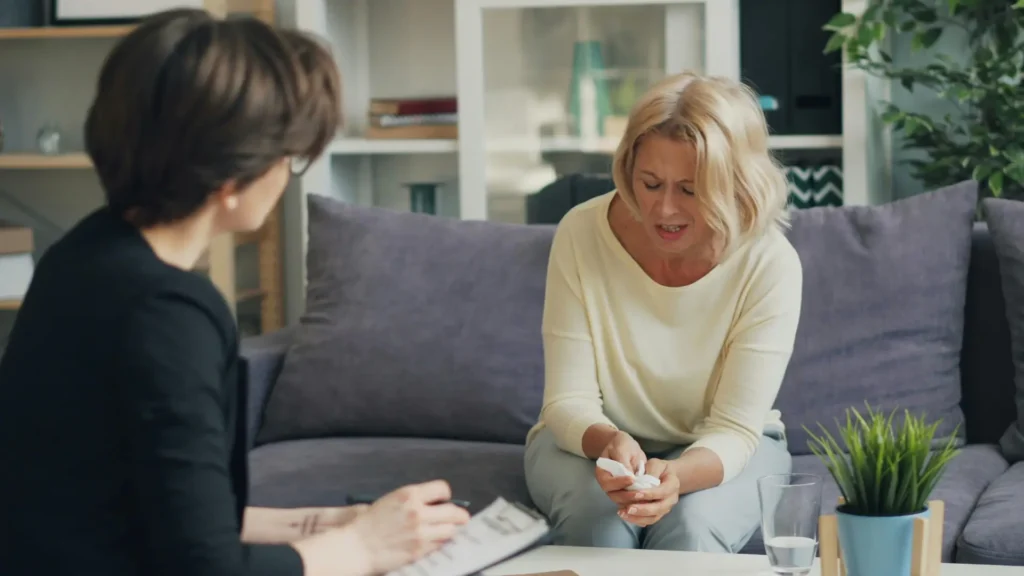
Treatment begins with a full mental health assessment, typically 60 to 90 minutes with a licensed clinician, covering your mental health history, current symptoms, medications, and goals. Assessments use standardized screening tools alongside the conversation, and the findings shape your treatment plan from day one rather than a one-size-fits-all schedule.
From there, each day follows a structured routine. Individual therapy sessions are one-on-one work with your clinician: exploring what is underneath the symptoms and building coping mechanisms that actually fit your life. Group sessions connect you with people working through similar challenges, with a focus on communication skills and emotional regulation. Wellness activities, including mindfulness, breathing techniques, and relaxation practices, fill out the day, because consistency and routine are themselves part of the treatment.
You live on-site in comfortable accommodations with private spaces to rest between sessions, and staff support is available 24/7. Length of stay is set by clinical recommendation, not a fixed calendar, and your treatment team reviews the plan with you as you progress.
Your Clinical Team
Your care is led by Medical Director Courtney S. Scott, MD, alongside Clinical Director Sean O’Neill and a team that includes psychiatric nursing, licensed therapists, and master’s-level clinicians. Clinical oversight is physician-led, and psychiatric and therapeutic monitoring runs throughout your stay, so medication decisions and therapy move together instead of in separate silos.
Case management is part of the program as well. Your case manager handles the coordination around treatment, from communication with insurance to planning what comes after discharge, so the logistics do not land on you while you are doing the clinical work.
Therapies We Use
Our residential program uses dialectical behavior therapy (DBT), cognitive behavioral therapy (CBT), EMDR, family therapy, group therapy, and psychiatric medication management across the week.
DBT is a core part of our residential treatment for people managing intense emotions, self-harm urges, or suicidal thoughts. It teaches distress tolerance, emotion regulation, and interpersonal skills you practice daily in the residence, where the structure gives the skills somewhere to land.
CBT anchors most treatment plans. It targets the thought patterns that drive anxiety and depression and replaces them with responses you rehearse between sessions.
EMDR is offered when trauma is part of the picture, helping you process traumatic memories without retelling them in detail. Family therapy brings the people close to you into the work, and group therapy builds skills alongside others facing similar challenges.
Psychiatric medication management is integrated into the program: evaluation, prescribing, and ongoing monitoring happen alongside your therapy, with adjustments made based on how you actually respond rather than a follow-up appointment weeks away.
Conditions We Treat in Residential Care
We treat anxiety, depression, trauma and PTSD, self-harm, suicidal ideation, and co-occurring conditions in our residential program.
Residential treatment programs can help individuals:
- Anxiety, including severe and treatment-resistant anxiety. If you are looking for an anxiety residential program, this is the level of care built for it.
- Depression that has stopped responding to weekly therapy or is affecting your ability to function
- Trauma and PTSD, treated with trauma-focused therapy including EMDR
- Self-harm, with DBT-based skill building at the center
- Suicidal thoughts and ideation, in a setting built for safety and stabilization
- Dual diagnosis, where mental health conditions such as depression, anxiety, PTSD, or bipolar disorder occur alongside substance use and the two are treated together rather than separately
If you are not sure your situation fits, call (820) 200-5275 and our admissions team will talk it through with you.

The Residence
You can see the facility before you ever call. Our facility tour shows the accommodations, the light-filled group therapy lounges, and the spaces built for both private reflection and community connection. The residence is designed to feel like a home rather than a clinic, because the environment you recover in is part of the recovery.
Days include wellness activities such as yoga, acupuncture, and sound bowl healing alongside clinical programming. These run with, not instead of, your therapy: movement, mindfulness, and stress reduction that support the clinical work happening in sessions.
Residential Treatment vs Outpatient Programs
Which level of care is right for me?
Residential Treatment | Outpatient Programs | |
Where you live | On-site at the residence | At home |
Support | 24/7 clinical and support staff | During scheduled sessions |
Daily structure | Full structured day of therapy and activities | Sessions fit around work, school, and home life |
Best for | Safety concerns, severe symptoms, step-down from hospitalization, outpatient care that has not been enough | Stable home environment, milder symptoms, step-down from residential |
Insurance | Covered by most plans; we verify in minutes | Covered by most plans; we verify in minutes |
Residential is the right level when you need round-the-clock support and distance from the stressors feeding your symptoms. Outpatient is the right level when home is stable and you can apply what you learn in daily life as you go. Many people complete residential care and step down to our outpatient programs with the same clinical team.
After Residential Treatment
Treatment does not end at discharge; it steps down. Before you leave, your team builds an aftercare plan with you, and for most people that means continuing with our outpatient programs] while returning to work, school, and home life. The continuum runs from intensive stabilization through ongoing outpatient support under one clinical roof, so stepping down means keeping your team, not starting over with a new one.
Your case manager coordinates the transition, including scheduling, insurance authorization for the next level of care, and connecting any outside providers you already work with.
Residential Mental Health Treatment in Tarzana and the San Fernando Valley
Our residence is in Tarzana, in the heart of the San Fernando Valley in Los Angeles, California. About 1 in 5 adults in Los Angeles County experiences a mental health condition in a given year, and roughly 3 to 4 percent live with a serious mental illness, according to the Los Angeles County Department of Public Health. Demand for care in the county far outpaces access to it.
The facility sits just off the 101 near Ventura Boulevard, which keeps visits practical for family participating in treatment and makes the transition into our outpatient programs simple after discharge. For families searching from outside the Valley, residential care means your loved one lives on-site, so the drive matters far less than the fit.
How Admissions Works
Admissions starts with one call or one form. First, we verify your insurance and give you a clear understanding of your coverage options within minutes. Second, we coordinate a clinical assessment, typically 60 to 90 minutes, to confirm residential care is the right level for you. Third, we move quickly to transition you into treatment.
You do not need a physician referral to start, and everything you share during admissions is held to strict confidentiality standards. If you are calling about a loved one rather than yourself, our team can walk you through how to approach the conversation and what the process looks like from their side.
If you are in immediate danger or thinking about harming yourself right now, call or text 988, or go to the nearest emergency room first. We can coordinate next steps from there.
Insurance and Cost
We work directly with major insurance providers to maximize your benefits and minimize out-of-pocket costs, and we verify your coverage within minutes. Most commercial insurance plans cover residential mental health treatment; your exact benefits depend on your specific plan. The verification form on our admissions page is secure, and everything you share is protected by strict confidentiality standards. Our team reviews your policy in full and gives you a clear picture of your coverage options before you make any decision, with no obligation attached.
If you would rather talk it through, call (820) 200-5275. Whether you are looking into treatment for yourself or for a loved one, the conversation is confidential either way.
Medically reviewed by Courtney S. Scott, MD, Medical Director at Dynamic Behavioral Health.