




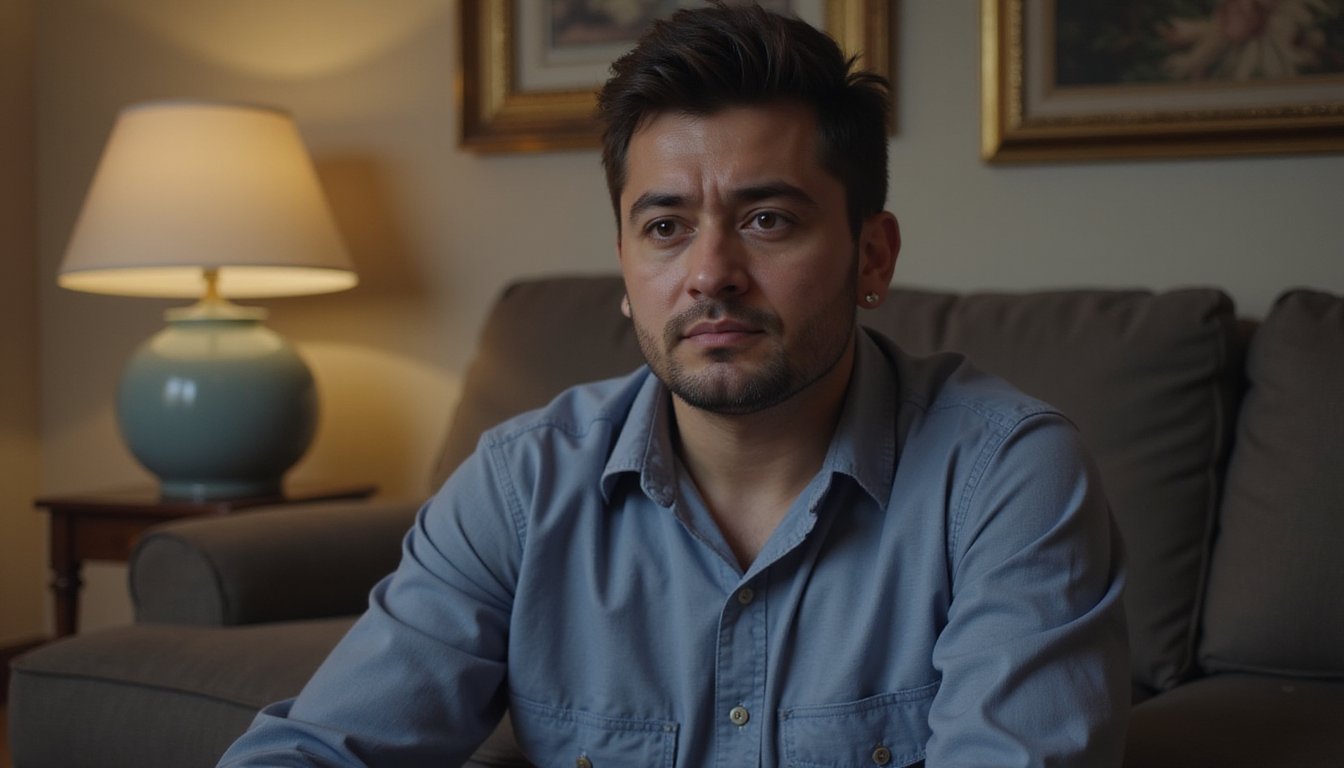


When anxiety keeps you awake, your brain’s default mode network kicks into overdrive, fueling worry while your logical mind goes offline. You can break this cycle by starting a wind-down routine at least an hour before bed—try warm baths, gentle stretching, or calming music. If sleep doesn’t come within 15–20 minutes, leave the bed and do something quiet in dim light. The techniques below will help you calm both your body and racing thoughts.
Why Does Anxiety Hijack Your Brain at Bedtime?

When the lights go off and the day’s demands fade, your brain doesn’t simply power down—it shifts inward. Your default mode network activates, driving self-reflection, memory processing, and worry. Without daytime distractions like work or social obligations, ruminative “what if” thinking intensifies.
Chronic stress can also reverse your cortisol rhythm, spiking levels in the evening when they should drop. This leaves your nervous system wired and alert precisely when you need calm. Meanwhile, a single sleepless night can raise next-day anxiety by 30%, impairing your brain’s emotion regulation center and reinforcing bedtime dread. With the logical brain offline, problems appear far larger than they actually are, allowing emotional responses to dominate your thinking and fuel catastrophic spirals.
Understanding these mechanisms is the first step in learning how to sleep through anxiety rather than fighting it each night. Many people wonder why does my anxiety feel worse at night, and it is often linked to the quiet darkness that amplifies racing thoughts. As the day winds down, unresolved worries can surface, making it challenging to find peace. Recognizing these patterns can help in developing strategies to manage nighttime anxiety effectively.
Build a Wind-Down Routine That Eases Sleep Anxiety
Although your brain may resist sleep when anxiety is running high, a structured wind-down routine can retrain your nervous system to recognize bedtime as safe rather than threatening. Start at least one hour before bed to allow your body to shift from fight-or-flight into rest-and-digest mode.
Fill this window with science-backed activities: read a physical book, take a warm bath, practice gentle stretching, or listen to calming music. Warm water specifically lowers sympathetic arousal and eases muscle tension, mimicking your body’s natural sleep preparation.
Understanding how to sleep when anxious starts with consistency. When you repeat the same routine nightly, melatonin production responds, and your brain begins associating these cues with sleep—not stress. If you still can’t fall asleep within 15–20 minutes, get out of bed and do a calming activity in another room so you continue to associate your bed with sleep rather than anxiety.
Calm Your Body With Breathing and Muscle Relaxation
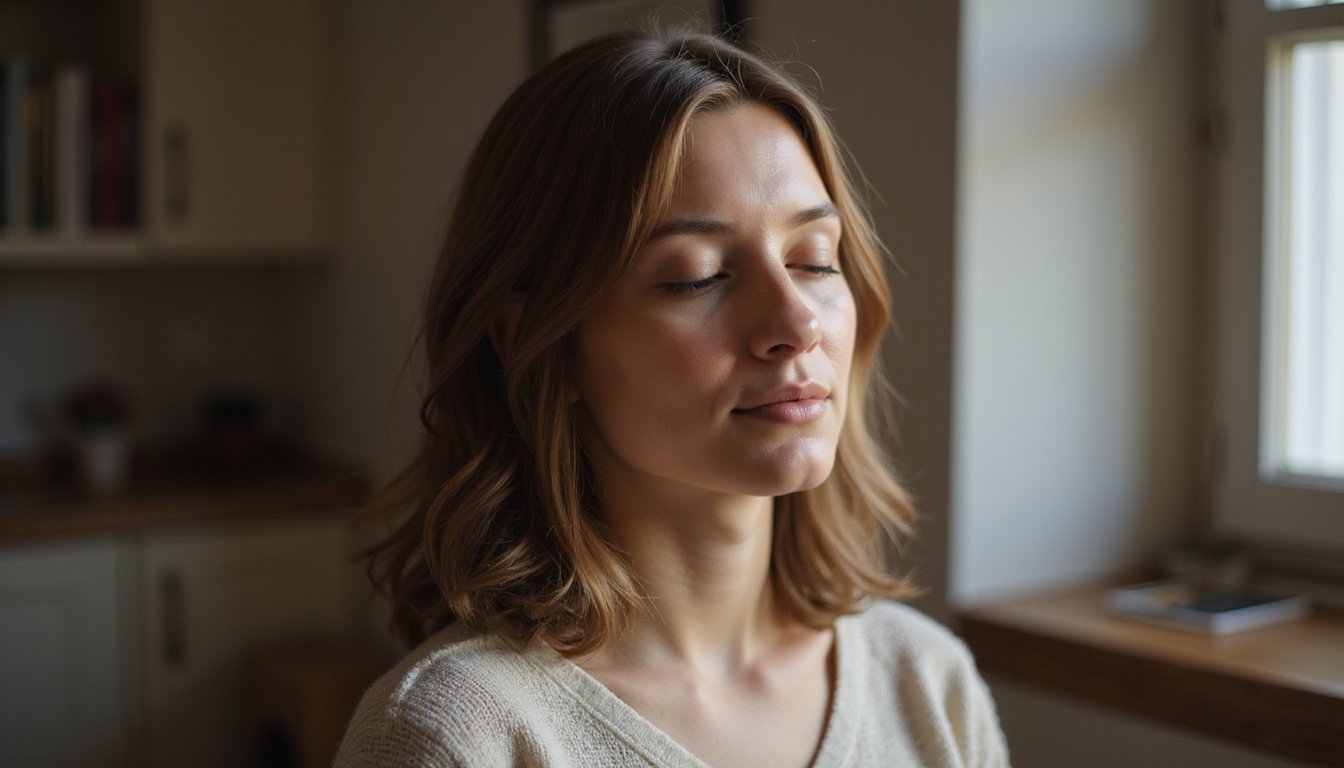
Because anxiety activates your sympathetic nervous system—triggering a faster heart rate, shallow breathing, and muscle tension—your body can’t simply “decide” to fall asleep. You need techniques that directly counteract this physiological arousal. If you’re learning how to go to sleep with anxiety, start with breathing methods that extend your exhale beyond your inhale, activating your parasympathetic nervous system.
When anxiety hijacks your nervous system, longer exhales are your fastest path to activating your body’s built-in calming response.
Try one of these evidence-based approaches:
- Extended Exhale Method: Inhale 4 counts, exhale 6+ counts
- 4-7-8 Relaxing Breath: Inhale 4 counts, hold 7, exhale 8
- 4-2-6 Calming Exercise: Inhale 4 seconds, hold 2, exhale 6
- Box Breathing: Inhale, hold, exhale, hold—4 counts each
- Alternate Nostril Breathing: Practice 10 minutes for full calming effect
Each technique slows your heart rate, reduces blood pressure, and settles your mind toward sleep. With consistent practice, these breathing exercises can promote long-term relaxation that makes falling asleep easier over time.
Stop Racing Thoughts Before They Spiral
Racing thoughts at bedtime aren’t just annoying—they’re a physiological event. Your nervous system locks into alert mode, and each anxious thought triggers another, creating a self-reinforcing cycle that blocks sleep onset.
Breaking this cycle starts with recognition. When you notice catastrophic thinking gaining momentum, pause and ask: “What’s the most realistic outcome?” This cognitive restructuring technique interrupts escalation by introducing evidence-based perspective. You’re not eliminating the thought—you’re changing your relationship to it.
Learning how to fall asleep with anxiety often means intercepting spirals early. Try the grounding approach: identify five sounds in your environment. This sensory anchor pulls attention from hypothetical futures back to present reality, giving your nervous system permission to stand down and let sleep arrive. Another effective strategy for managing sleep anxiety symptoms involves establishing a calming bedtime routine. Engage in activities that promote relaxation, such as reading or gentle stretching, which can help signal to your body that it’s time to wind down. Additionally, consider keeping a sleep diary to track patterns and triggers related to your sleep anxiety symptoms, allowing for better understanding and management of your nighttime challenges.
What to Do When You Can’t Fall Asleep?

Even after intercepting racing thoughts, you may still find yourself staring at the ceiling—awake, frustrated, and unsure what to do next. When this happens, one of the most effective ways to fall asleep when anxious is to break the cycle of lying in bed awake. To learn how to reduce anxiety at night, consider incorporating a calming bedtime routine that prioritizes relaxation. Techniques such as deep breathing exercises, gentle stretches, or reading a soothing book can significantly lower anxiety levels. Additionally, creating a peaceful sleep environment, free from distractions and clutter, can further enhance your ability to unwind.
When anxiety keeps you awake, the most powerful move is breaking the cycle—not fighting it from your pillow.
If you haven’t fallen asleep within 15–20 minutes, try these steps:
- Get out of bed to prevent your brain from linking bed with wakefulness.
- Move to another room with dim lighting and do something quiet, like reading.
- Avoid clock-watching, which only amplifies stress.
- Skip stressful tasks like checking emails or paying bills.
- Return to bed after 20–30 minutes or when sleepiness returns.
This protocol retrains your brain to associate bed with sleep—not anxiety.
Call Now and Let Us Guide Your Healing
Restless nights and racing thoughts can take a serious toll on your overall well-being, but relief is within reach. At Dynamic Behavioral Health, we provide personalized Anxiety Treatment tailored to help you break the cycle of worry and reclaim peaceful nights. Dial +1 (820) 200-5275 now and connect with a team that is ready to stand by your side.
Frequently Asked Questions
Is It Safe to Take Melatonin Supplements Every Night for Anxiety-Related Insomnia?
You shouldn’t take melatonin every night long-term without medical guidance. Short-term use at low doses (1–3 mg) for one to two months appears safe, but recent research links 12+ months of use to considerably higher risks of heart failure and mortality. Melatonin also isn’t FDA-indicated for insomnia. You’ll want to consult your healthcare provider, reassess after two months, and explore other strategies for managing anxiety-related sleep difficulties.
Can Anxiety Medication Help Me Fall Asleep Faster at Night?
Yes, certain anxiety medications can help you fall asleep faster. Benzodiazepines like lorazepam reduce sleep latency quickly but carry dependence risks with extended use. Hydroxyzine offers fast-acting relief without habit-forming concerns. Trazodone at low doses improves sleep initiation for people with co-occurring anxiety. SSRIs and SNRIs won’t work immediately but gradually improve sleep quality over weeks. Your doctor can match the right option to your specific symptoms and needs.
How Long Should CBT-I Treatment Last Before Expecting Noticeable Sleep Improvements?
You can expect noticeable improvements within 6 to 8 weeks of starting CBT-I, though some changes appear sooner. Sleep restriction techniques, for example, may improve sleep quality within just one week. Treatment typically spans 4 to 8 sessions, scheduled weekly or biweekly. Early gains usually show up as faster sleep onset and better sleep quality. Staying consistent throughout treatment directly influences how quickly you’ll experience meaningful results.
Should I See a Sleep Specialist or a Therapist for Sleep Anxiety?
You’ll benefit most from starting with a sleep psychologist or therapist trained in CBT-I, since it’s the recommended first-line treatment for anxiety-related sleep difficulties. If your sleep anxiety connects to a diagnosed mental health condition, a psychiatrist can address both the anxiety and sleep simultaneously. You’d see a sleep specialist if your provider suspects an underlying medical sleep disorder. Often, coordinated care across these providers delivers the most effective results.
Can Regular Daytime Exercise Reduce Anxiety-Related Sleep Problems at Night?
Yes, regular daytime exercise can meaningfully reduce anxiety-related sleep problems. Research shows that consistent moderate aerobic activity—even just 20-minute sessions two to three times weekly—lowers anxiety symptoms and helps you fall asleep faster, often by 13 minutes within four weeks. Mind-body exercises like yoga also calm your nervous system, easing that hyperarousal that keeps you awake. You don’t need intense workouts; steady, moderate movement creates lasting improvements in both anxiety and sleep quality.