Sound bowl healing at Dynamic Behavioral Health is a gentle, restful practice in which resonant tones from instruments like singing bowls guide your body into a calmer, more settled state. You do not have to do anything except lie back and listen, which makes it one of the easiest ways to reach deep relaxation, especially for people who find other practices demanding. It is a supportive practice offered alongside clinical care, not a replacement for it, and our admissions team can verify your insurance whenever you are ready.
What Sound Bowl Healing Is
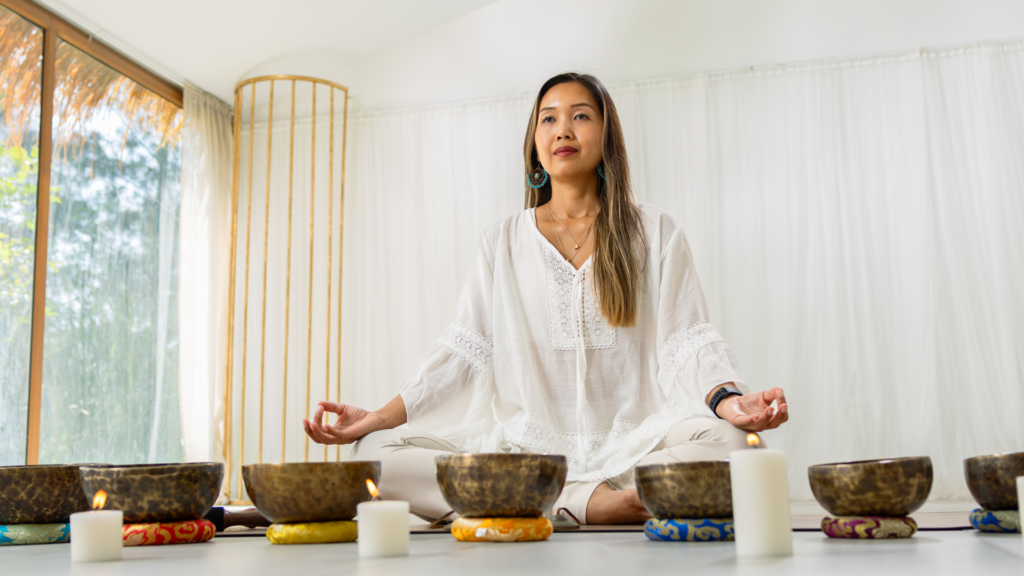
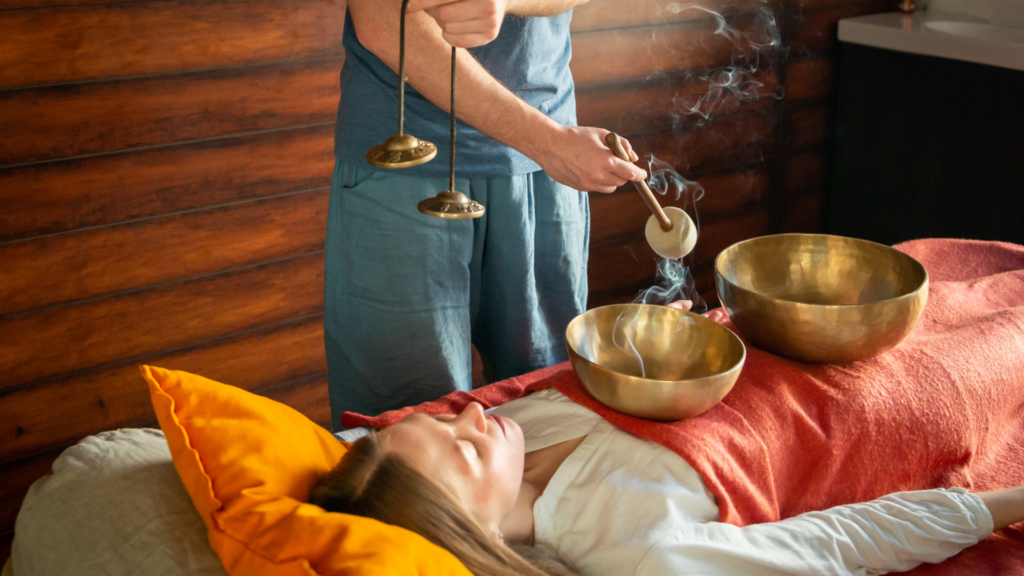
Sound bowl healing is a practice that uses tones and vibrations from instruments such as singing bowls, chimes, gongs, and tuning forks to help the body and mind settle into a relaxed state. You rest while a practitioner plays the instruments in a structured, intentional way, and the resonant sound fills the space around you. The experience is often described as a sound bath, because the sound surrounds you the way water would.
What it is used for here is straightforward and observable: deep relaxation and a quieter mind. As the sound washes over you, the nervous system tends to settle, mental noise softens, and the body eases toward rest. Sound bowl healing is offered as a supportive practice, not a standalone treatment for mental health conditions, its role is to promote relaxation and mindfulness alongside the clinical care that does the primary work.
You Do Not Have to Do Anything
The single most appealing thing about sound bowl healing is that it asks almost nothing of you. Where other practices involve movement, effort, or learning a technique, this one only asks you to lie down, get comfortable, and listen. There is no skill to build, no posture to hold, no breathing pattern to follow, and nothing you can do wrong. You are not performing the practice; you are receiving it.
That makes it a rare entry point for people who find other approaches too demanding, whether because of physical limitations, low energy, or simply feeling too overwhelmed to take on one more thing. If you have ever felt that you should relax but could not make yourself do it, sound offers a way that does not depend on your effort. The sound does the work of drawing your attention, so you do not have to manufacture calm on your own.
For People Who Think They Cannot Meditate
A lot of people believe they cannot meditate because their thoughts will not go quiet, and sound bowl healing is often a good fit for exactly those people. The common frustration with meditation is the effort of trying to still a racing mind, and the way that effort can make the racing worse. Sound sidesteps that struggle. Instead of trying to empty your mind, you simply have something to rest your attention on, the tones, the vibrations, the way one sound gives way to the next. Yoga offers a similar experience by focusing the mind on breath and movement. It builds awareness without requiring complete mental stillness, helping many people feel more relaxed and clear-headed.
Because the sound is engaging and continuous, the mind tends to follow it naturally, without being forced. Many people who have given up on meditation find that a sound session quiets their thoughts more easily than sitting in silence ever did, not because they got better at quieting them, but because they no longer had to. The practice carries the attention for you, and the mental quiet comes as a byproduct rather than a goal you have to achieve.
What a Session Is Like
A sound bowl session is calm and simple from beginning to end. You lie down or sit comfortably, often with your eyes closed, while the practitioner plays the instruments in a slow, deliberate way. There is nothing you need to do but be there and let yourself listen. Sessions are unhurried, and the sound builds and shifts gradually rather than abruptly. Case management services can support your overall wellness with personalized guidance and resources. This added support can complement sound therapy, helping you manage challenges and experience deeper relaxation.
People experience it in different ways. Many feel a deep physical relaxation settle in, some drift toward sleep, and others notice the resonance almost physically, as a pleasant, grounding hum. It is common for the constant mental chatter to quiet and for a sense of calm and presence to take its place. Whatever you feel, there is no wrong way to experience a session, and you can simply let it be whatever it is for you that day.
The Instruments and the Sound Itself
It helps to know a little about what actually makes the sound, because the instruments are part of what gives the practice its character. Singing bowls, whether metal or crystal, produce sustained, resonant tones when played, sounds that swell slowly and linger rather than starting and stopping sharply. Chimes and tuning forks add clear, bright notes, and gongs bring a fuller, enveloping wash of sound. A practitioner plays them deliberately, letting tones overlap and fade, building an unhurried soundscape rather than a melody. Part of what makes the effect so settling is the physical quality of the sound: the tones are rich and continuous, and you can sometimes feel the resonance as much as hear it, a gentle, steady hum that the body seems to relax into. There is nothing jarring or fast in it, which is exactly the point. The sound is designed to slow you down, and its unhurried, overlapping quality is what makes that happen almost on its own.
What Sound Bowl Healing Can Help With
Sound bowl healing is used to support relaxation and ease the mental and emotional strain of stress. People find it helpful for reaching deep relaxation, for quieting racing thoughts and mental clutter, for easing the physical restlessness that comes with anxiety, and for the general sense of overwhelm that mental health struggles can bring. By helping the mind and body settle, it can also support a steadier emotional state and a greater sense of presence.
These are supportive effects, not cures. Sound bowl healing eases stress and helps quiet the mind, which can make the clinical work more effective, but it complements anxiety treatment and the rest of your care rather than replacing it. The calmer, quieter state it helps produce is a better foundation for the therapy that addresses what is underneath the stress.
Why the Calm Tends to Last
One of the reasons people return to sound sessions is that the calm does not always end when the sound does. A session tends to leave a kind of afterglow, a settled, unhurried state that can linger into the rest of the day, the way a good night’s sleep or a long walk sometimes does. That lingering calm is part of the value, because it gives the nervous system a genuine break from the activated, on-alert state that chronic stress keeps it in, and even a temporary reset is worthwhile when stress has been relentless. For some people, the effect deepens with repetition, as the body learns the state and finds its way there more readily each time. None of this is a permanent fix, and it is not meant to be. It is a recurring way to return to calm, a reliable reset that supports the longer, harder work of treatment rather than standing in for it. Dynamic behavioral health emphasizes the importance of ongoing support and self-care practices. Engaging with techniques that encourage mindfulness can further enhance this sense of calm.
How Sound Bowl Healing Fits Into Your Care
Sound bowl healing is one of our wellness practices, part of the supportive, body-and-mind-focused side of care rather than the clinical core. Your therapy and psychiatric care do the primary work of treating a mental health condition; sound healing, like the other wellness practices, supports that work by promoting relaxation and quieting the mind. You can read about the full range of these practices, and how this kind of care fits into mental health treatment, on our holistic wellness page.
Used within a treatment plan, sound bowl healing offers a recurring, low-effort way to reset, something that can steady a hard week and reinforce the calm built elsewhere in care. For people who respond to it, a sound session becomes a reliable way back to a settled state when stress has pulled them out of one.
Getting Started
Access to sound bowl healing and our other wellness practices begins with the same clinical evaluation that shapes the rest of your care, which identifies the practices that fit your needs and preferences and builds them into your plan.
Our facility is in Tarzana, in the San Fernando Valley, and insurance is verified quickly and confidentially through our admissions team. When you are ready, one call starts at (820) 200-5275. If you are in crisis or thinking about harming yourself, call or text 988 first, and this work can begin once you are safe.

Medically reviewed by Courtney S. Scott, MD, Medical Director at Dynamic Behavioral Health.