





Brain stimulation therapy uses targeted magnetic or electrical pulses to modulate nerve cells in your brain’s left dorsolateral prefrontal cortex—a region critical for mood regulation. It resets dysfunctional neural circuits rather than altering your entire brain chemistry. About 50% of patients experience substantial symptom relief, and 30% achieve full remission, often with fewer side effects than medications. From standard TMS to accelerated protocols, several approaches can match your specific condition and treatment history.
How Does Brain Stimulation Therapy Treat Depression and Anxiety?
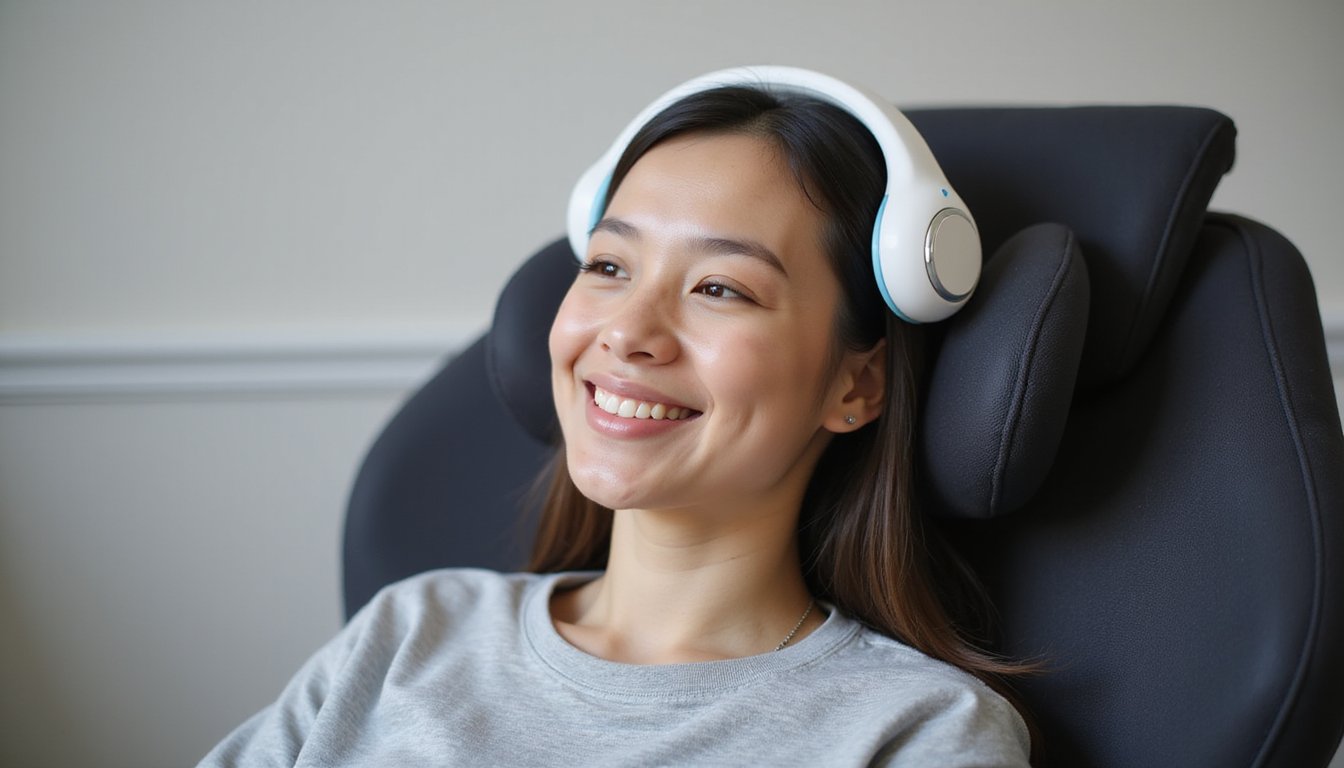
Brain stimulation therapy works by increasing neuroplasticity—your brain’s ability to form new neural pathways—and resetting dysfunctional network connections that underlie depression and anxiety. Magnetic pulses induce small electric currents that modulate nerve cells in regions governing mood regulation and emotional control. Deep brain stimulation techniques for mental health have emerged as a promising approach to enhance traditional therapies. They provide new avenues for patients who have not responded to conventional treatments.
Treatment primarily targets your left dorsolateral prefrontal cortex (DLPFC), a key hub in the brain’s mood-processing network. When this region functions suboptimally, depressive and anxious symptoms intensify. Brain stimulation for depression and anxiety directly addresses these neural deficits by restoring healthier activity patterns within affected circuits.
Rather than altering brain chemistry systemically like medication, this approach precisely recalibrates the specific networks driving your symptoms, offering a targeted neurobiological intervention for treatment-resistant conditions. Clinical studies have shown that improvements in anxiety symptoms remain durable for at least 16 weeks after completing the treatment course.
Standard TMS: What Six Weeks of Brain Stimulation Looks Like
When your psychiatrist prescribes standard TMS for treatment-resistant depression, you’ll follow an FDA-approved protocol of approximately 30 sessions—five per week, Monday through Friday—spanning four to six weeks. Each session lasts 17 to 37 minutes in your provider’s office, requiring no anesthesia or sedation.
Among brain stimulation therapy types, standard TMS offers a predictable improvement timeline. During weeks one and two, you may notice subtle mood shifts. By weeks two through four, sleep quality and daily motivation typically improve. By week four, functional gains emerge. At completion, roughly 50% of patients achieve substantial relief, with 30% reaching full remission. You can resume normal activities immediately after each session, with mild scalp discomfort or headaches as the most common side effects. Unlike medication, which affects the entire body, TMS targets specific brain areas responsible for mood regulation, which contributes to its favorable side-effect profile.
Accelerated TMS: The Same Results in Five Days
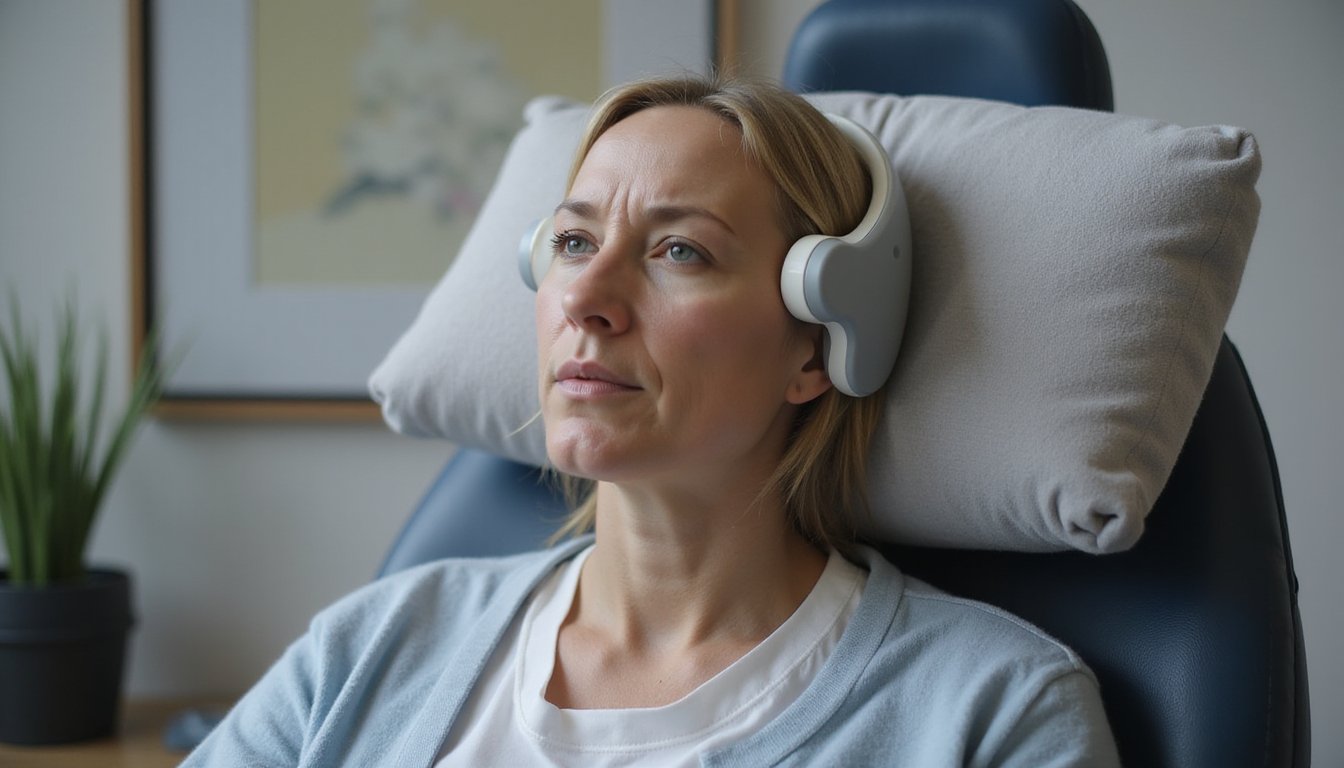
Accelerated TMS protocols compress 40–50 sessions into five consecutive days using intermittent theta burst stimulation, with each 3–10 minute session separated by 50-minute neurological recovery periods. The SAINT protocol‘s first large-scale study demonstrated a 90% remission rate within 3–5 days, while follow-up trials confirmed 79% remission—results that rival or exceed standard six-week protocols. Not all patients qualify for accelerated treatment, as careful screening is required to ensure safety and suitability before beginning an intensive protocol. Even when you don’t experience immediate relief, protocols like the ONE-Day approach show 73% remission by six weeks post-treatment, indicating that the neuroplastic changes triggered during intensive stimulation continue producing therapeutic benefits well after your final session.
Condensed Treatment Schedule
Urgency drives innovation in mental health treatment, and accelerated TMS protocols deliver on that principle. Instead of committing to six to eight weeks of standard sessions, you’ll complete 50 sessions across just five consecutive days. Each treatment day includes 10 iTBS sessions spaced at 50-minute intervals, spanning approximately five hours.
This brain stimulation therapy compresses high-frequency theta burst stimulation into a clinically intensive regimen without sacrificing efficacy. You’re receiving the same therapeutic dosing in a fraction of the time. The protocol uses neuronavigation-guided coil placement to guarantee precision targeting of neural circuits involved in mood regulation. Because sessions are non-invasive and require no sedation, you can drive yourself to and from appointments, maintaining autonomy throughout the treatment week.
Comparable Symptom Relief
Though the compressed timeline may raise questions about efficacy, clinical data consistently demonstrate that accelerated TMS produces symptom relief comparable to standard six-week protocols. The SAINT protocol achieved a 79% remission rate within five days, while UCLA’s February 2026 study confirmed meaningful relief matching conventional schedules.
You’re receiving 25 sessions over five days rather than spread across weeks, yet the neurobiological outcomes remain equivalent. All three TMS treatment protocols produce similar clinical results, with accelerated delivery likely providing faster relief. This brain stimulation mental health care approach condenses therapeutic benefit without sacrificing effectiveness.
If you’ve failed at least two prior treatments, accelerated TMS addresses your specific needs. The 5×5 protocol delivers equal efficacy to once-daily conventional treatment, eliminating prolonged waiting periods while maintaining the same clinical standard. What is TMS therapy is designed to help individuals who have not found relief through traditional treatment options. This innovative approach can target brain areas involved in mood regulation, offering a new path to wellness.
Delayed Improvement Benefits
While roughly half of accelerated TMS patients experience significant improvement immediately after completing the five-day protocol, the other half don’t show meaningful gains until two to four weeks later. These delayed responders ultimately achieve a 36% reduction in depression scores, reaching outcomes comparable to immediate responders.
This delayed response pattern suggests that neuromodulation therapy mental health applications require additional biological processing time beyond active stimulation. Your brain continues consolidating neuroplastic changes after treatment ends. If you don’t notice improvement by day five, that doesn’t indicate treatment failure. Clinicians should schedule follow-up assessments two to four weeks post-treatment to accurately capture your full response. Premature protocol changes based solely on five-day outcomes risk eliminating benefits that haven’t yet manifested, potentially undermining an otherwise effective treatment course.
Stanford Neuromodulation Therapy: Personalized Brain Stimulation
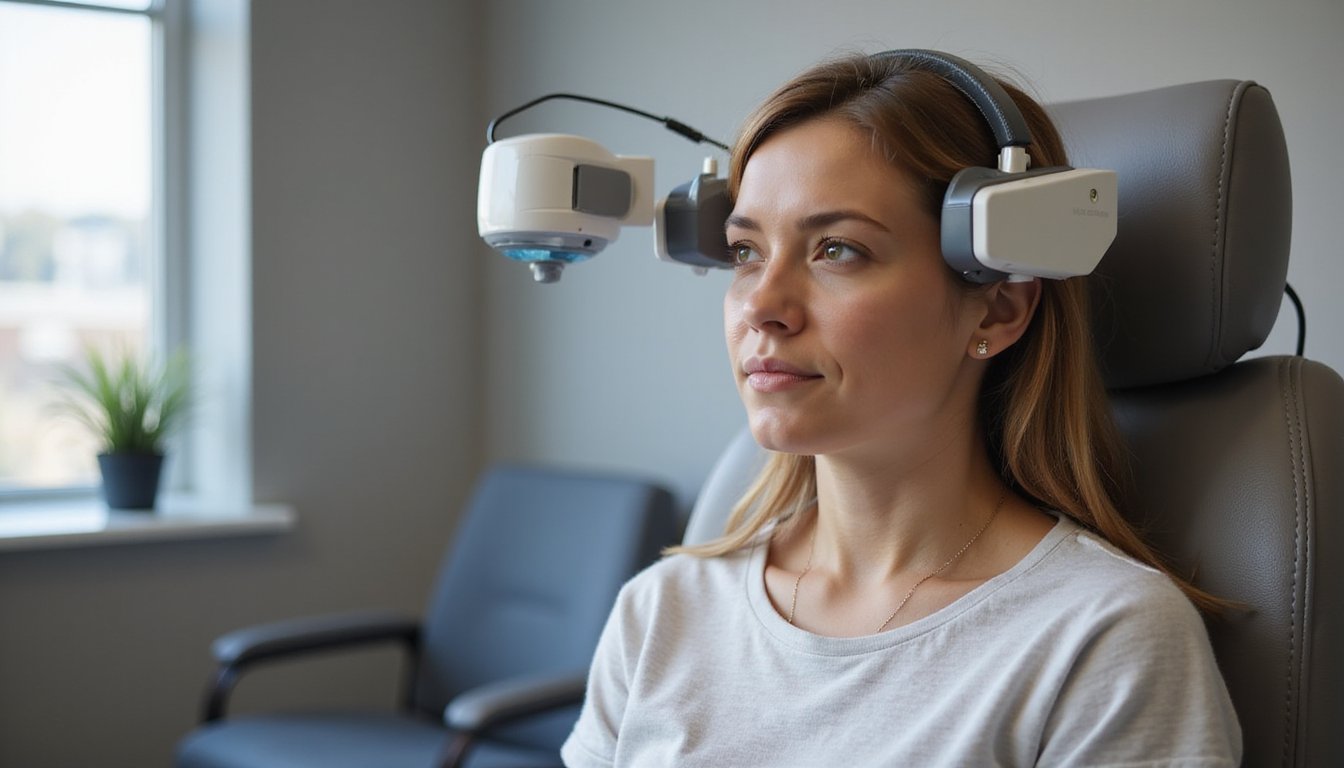
Stanford Neuromodulation Therapy (SNT) delivers 90,000 magnetic pulses over five consecutive days, achieving remission rates of nearly 80% in individuals with severe treatment-resistant depression—typically within days of starting treatment. Unlike conventional TMS, SNT uses functional connectivity MRI to map your brain’s unique neural architecture, enabling precise targeting of the left dorsolateral prefrontal cortex based on your individual functional connectivity patterns. This personalized approach also supports real-time stimulation adjustments, allowing clinicians to measure your brain’s response and adapt the protocol as treatment progresses.
Five-Day Remission Results
Among the most striking developments in modern psychiatric treatment, Stanford Neuromodulation Therapy (SNT)—formerly known as SAINT—has demonstrated unprecedented remission rates within a condensed five-day treatment course. As a brain-based therapy depression anxiety specialists now consider groundbreaking, SNT achieved 78.6% remission in its initial double-blind, randomized clinical trial, with 85.7% of participants meeting response criteria. Neurofeedback therapy is gaining traction as a significant adjunct to traditional psychiatric methods. This innovative approach allows patients to gain greater control over their mental states by training their brain activity.
You’ll find these results particularly compelling when compared to conventional TMS, which yields approximately 30% remission rates. SNT’s accelerated protocol replaces the traditional seven-week treatment timeline, delivering complete remission within one week of acute treatment. Some patients experienced relief within days. Remarkably, 90% of patients previously unresponsive to conventional TMS achieved remission with SNT, earning its designation as the gold standard for treatment-resistant depression.
Personalized Stimulation Targeting
Unlike conventional TMS protocols that apply stimulation to fixed anatomical landmarks, SNT uses functional connectivity MRI (fcMRI) to map each patient’s unique brain circuitry and identify personalized treatment targets. Your left dorsolateral prefrontal cortex (L-DLPFC) serves as the primary stimulation site, selected for its role in mood regulation, while left anterior cingulate cortex activity tracks your treatment response.
This personalized stimulation targeting represents a significant advancement among alternative treatments depression anxiety patients can access. Clinicians assess your pre-treatment frontal beta power to predict target engagement and signal propagation to subcortical regions. EEG co-registration with MRI guarantees precise source localization. By matching stimulation to your functional brain networks rather than standardized coordinates, SNT optimizes downstream circuit engagement, directly addressing the dysfunctional neural pathways underlying your symptoms.
Real-Time Treatment Adjustments
While standard TMS protocols rely on fixed stimulation parameters throughout the entire treatment course, SNT incorporates real-time EEG beta activity monitoring to measure brain changes after each session and guide subsequent adjustments. This non-invasive brain stimulation therapy updates stimulation patterns after every session using neuroimaging biomarker data, ensuring you receive ideally calibrated treatment throughout the protocol.
| Adaptive Feature | Mechanism | Clinical Benefit |
|---|---|---|
| EEG Beta Monitoring | Targets elevated beta activity states | Session-specific enhancement |
| Neuroimaging Biomarkers | Guides post-session parameter updates | Precision-driven adjustments |
| Closed-Loop Protocols | Real-time stimulation modification | Improved therapeutic outcomes |
These real-time treatment adjustments represent a significant advancement over static protocols. Future adaptive systems could enhance both stimulation location and timing simultaneously, further personalizing your treatment trajectory for maximum effectiveness.
Deep TMS for Depression and Anxiety Together
Because depression and anxiety frequently co-occur, treating them as separate conditions often falls short. Deep TMS offers a polysymptomatic approach among mental health brain stimulation treatments, targeting both conditions simultaneously through BrainsWay’s patented H1 Coil.
This technology delivers magnetic pulses to your dorsolateral prefrontal cortex, strengthening its communication with the amygdala—your brain’s fear-response center. In controlled trials, 49% of patients responded to treatment versus 28% in the sham group, with approximately half experiencing sustained anxiety reduction through 16 weeks post-treatment.
Unlike medications, Deep TMS won’t cause systemic side effects or dependency. Importantly, high baseline anxiety actually predicts better outcomes—the opposite of what you’d see with standard anxiolytics. You’ll complete 30–40 outpatient sessions requiring no anesthesia or recovery time.
Focused Ultrasound: Brain Stimulation Without Surgery
Focused ultrasound represents a fundamental shift in brain stimulation—delivering acoustic energy to deep brain structures without a single incision, electrode, or implanted device. A 256-element ultrasound helmet sends converging beams to targets 1,000 times smaller than those of conventional ultrasound devices, directly influencing ion channel activity and neurotransmission at the molecular and network levels.
This precision makes focused ultrasound a compelling option for neuromodulation for depression and anxiety. By targeting the amygdala—a region consistently hyperactive in mood disorders—you can experience measurable reductions in neural activity during treatment, with effects sustained for at least 40 minutes post-session. Research published in Molecular Psychiatry confirms clinically significant improvements after three weeks of daily sessions. You avoid surgical risks entirely while gaining access to deep brain modulation previously achievable only through invasive procedures.
HD-tDCS: Clinical Brain Stimulation That May Work at Home
Among the emerging tools in non-invasive brain stimulation, high-definition transcranial direct current stimulation (HD-tDCS) stands out for its precision—and its potential to move clinical-grade neuromodulation into your home. Unlike conventional tDCS, HD-tDCS uses smaller electrodes paired with structural MRI and frameless stereotaxic neuronavigation to target the precise brain regions affected by your depression.
In a randomized controlled trial of 71 participants, active HD-tDCS produced a statistically significant reduction in depression scores compared to sham treatment (Cohen d = -0.50), with mood improvements emerging after just six days. Exploratory analyses also revealed significant anxiety reduction. Among advanced mental health treatments, brain stimulation therapies pursue, HD-tDCS demonstrated effects faster than comparable medication and psychotherapy timelines—with improvements sustained at four-week follow-up and a well-tolerated safety profile supporting future at-home applications.
Does Brain Stimulation Work for Resistant Depression?
When standard antidepressants and psychotherapy fail to produce adequate relief, how effectively can direct brain stimulation alter the course of treatment-resistant depression? Among neuromodulation treatment options, deep brain stimulation targeting subcallosal cingulate white matter demonstrates a 56% response rate across meta-analyses, with sustained effects through eight years of follow-up.
Deep brain stimulation achieves a 56% response rate in treatment-resistant depression, with benefits enduring through eight years of follow-up.
Consider these clinical benchmarks:
- DBS remission: 35% of treatment-resistant patients achieve remission, with 60% maintaining it long-term
- SAINT protocol: Nearly 80% remission in severe depression, typically within days
- Standard TMS: One-third of treated individuals experience complete symptom resolution
You should note that DBS improvement unfolds gradually over weeks to months, targeting white matter pathways connecting mood-regulation networks rather than producing immediate changes.
Does Insurance Cover Brain Stimulation Therapy?
Understanding that brain stimulation can produce meaningful clinical outcomes naturally raises a practical question: will your insurance actually pay for it? Most major insurers—including Blue Cross Blue Shield, Aetna, Cigna, and United Healthcare—now cover repetitive TMS for treatment-resistant depression. Medicare also provides coverage. However, approval isn’t automatic.
You’ll typically need documented failure of two to four antidepressant medications and, in some cases, a completed psychotherapy trial. Prior authorization is standard. Without insurance, a full treatment course costs $8,000–$15,000. With coverage, you’re looking at $50–$250 per session in copays. Deep TMS carries FDA clearance for OCD, but off-label applications like anxiety remain largely uncovered. As stimulation therapy mental health applications expand, coverage policies will likely evolve—but currently, treatment-resistant depression remains the primary insured indication.
Explore Innovative Care for Lasting Relief
When standard treatments haven’t worked, exploring advanced therapy options can be the turning point in your mental health journey. At Dynamic Behavioral Health in Tarzana, CA, our experienced team delivers reliable Mental Health Treatment with care, compassion, and a personalized approach. Call (820) 200-5275 today and begin a healthier chapter in your life.
Frequently Asked Questions
Can Brain Stimulation Therapy Be Combined With Antidepressant Medications During Treatment?
Yes, you can safely combine brain stimulation therapy with antidepressant medications. Research shows they work through distinct mechanisms—antidepressants influence chemical signaling broadly, while TMS delivers targeted stimulation to specific brain regions. A meta-analysis of 18 randomized controlled trials found this combination markedly outperforms medication alone, improving both response and remission rates. You’ll also likely experience faster symptom relief, and your provider can reassess medication needs once TMS improves your depressive symptoms.
How Long Do Brain Stimulation Therapy Results Typically Last After Treatment Ends?
Results vary by technique. With standard rTMS, you’ll typically maintain improvement for about eleven weeks, and 46% of responders retain benefits at one year. SAINT protocol achieves remission within days, lasting approximately eleven weeks. Deep TMS shows the strongest durability—you’ll likely sustain benefits for a year in 70% of cases. If symptoms return, you’ll respond well to booster sessions, with 84% regaining improvement through retreatment.
Are There Age Restrictions for Receiving Brain Stimulation Therapy Treatments?
Yes, age restrictions apply depending on your diagnosis. If you’re 15 or older, you’re eligible for NeuroStar TMS as an add-on treatment for major depressive disorder. However, you must be 22 or older to receive TMS for OCD or anxious depression. Your medical history also matters—conditions like seizures or metal implants in your head can disqualify you. You’ll need a provider evaluation to confirm your candidacy.
What Side Effects Should Patients Expect During Brain Stimulation Therapy Sessions?
You’ll most commonly experience headaches, which affect about 30% of patients during initial sessions, and scalp discomfort, occurring in roughly 25%. You may also notice tingling, facial muscle twitching, or jaw pain from the magnetic pulses stimulating nearby nerves. These side effects typically diminish after your first week of treatment. You can manage headaches effectively with over-the-counter pain relievers like ibuprofen taken before sessions. Serious complications, including seizures, remain exceptionally rare.
How Does Brain Stimulation Therapy Compare in Cost to Traditional Depression Treatments?
A standard TMS course costs you $6,000–$15,000, while traditional treatments—combining weekly therapy ($150/session) and monthly medication ($20/month)—run approximately $8,000+ annually with no end date. Over five years, you’d spend $79,500–$191,000 on conventional approaches. TMS often eliminates your need for ongoing medication and frequent therapy, making it more cost-effective long-term. Insurance now widely covers standard TMS protocols, further reducing your out-of-pocket expenses.