







TMS therapy is a noninvasive, FDA-approved procedure where an electromagnetic coil placed against your scalp delivers targeted magnetic pulses into specific brain regions. These pulses penetrate 2–3 cm deep, stimulating the left dorsolateral prefrontal cortex to modulate neurotransmitters like serotonin, dopamine, and norepinephrine. Over multiple sessions, this stimulation promotes neuroplasticity and strengthens neural connections, leading to measurable symptom relief. Understanding the different TMS types and candidacy criteria can help you determine if it’s right for you.
What Is TMS Therapy?
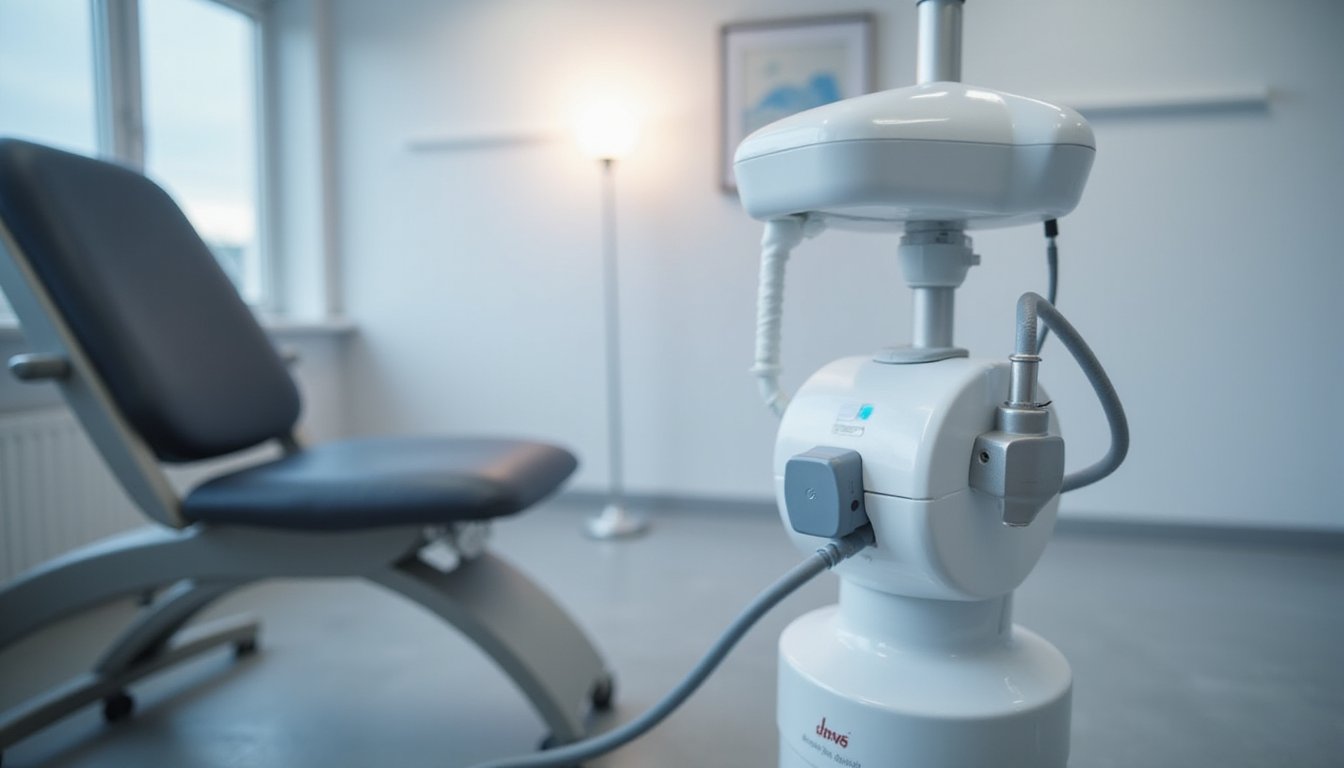
Transcranial Magnetic Stimulation (TMS) is a noninvasive procedure that uses targeted magnetic pulses to stimulate nerve cells in the brain. During treatment, a clinician places an electromagnetic coil against your scalp, delivering focused magnetic pulses to specific brain regions. The magnetic field penetrates your skull and produces electrical stimulation within brain tissue, altering neural activity through precise waveform patterns. This approach is FDA-approved for managing conditions such as depression, OCD, and certain migraines, and it allows for an immediate return to daily activities after each session.
How Does TMS Therapy Work Inside Your Brain?
When you undergo TMS therapy, an electromagnetic coil placed against your scalp delivers controlled magnetic pulses that penetrate 2-3 centimeters into your brain, generating small electrical currents that activate neurons in targeted regions. These pulses primarily stimulate your left dorsolateral prefrontal cortex (DLPFC), correcting the reduced activity in this region that’s associated with depression while rebalancing its relationship with the overactive right DLPFC. This targeted neuronal activation also modulates key neurotransmitters—including serotonin, dopamine, and norepinephrine—that directly regulate your mood, motivation, and stress response. Over time, this repeated stimulation promotes increased neuroplasticity, encouraging your brain to form new, healthier neural connections that support lasting improvements in mood and emotional regulation.
Magnetic Pulses Activate Neurons
When these electrical currents reach properly oriented neurons, they cause underperforming brain cells to fire. Repeated low-intensity stimulation activates targeted regions, prompting your brain to increase availability of serotonin, dopamine, and norepinephrine. These neurotransmitters play a critical role in mood regulation. By restoring their balance, TMS produces measurable reductions in depressive symptoms and enhances overall mental well-being through direct neurochemical modulation. Brain imaging studies using fMRI and PET scans have confirmed these significant changes in neural activity following TMS treatment.
Targeting the Prefrontal Cortex
Understanding how magnetic pulses activate neurons is only part of the picture—where those pulses land matters just as much. In TMS treatment for depression, the primary target is your left dorsolateral prefrontal cortex (DLPFC)—a region directly linked to mood regulation, cognitive control, and emotional resilience. Research confirms that individuals with depression exhibit noticeably reduced activity in this area.
By stimulating your left DLPFC, TMS helps restore the neural balance your brain needs to regulate emotions effectively.
- Corrects hemispheric imbalance by activating your underactive left DLPFC while calming the overactive right side
- Restores functional connectivity between mood-regulating brain circuits
- Reduces rumination by normalizing communication across default mode and executive networks
- Targets FDA-cleared coordinates calibrated to your individual motor threshold for precision delivery
Boosting Key Brain Chemicals
Beyond reshaping neural circuits, TMS therapy directly influences the brain’s chemical messaging system—triggering measurable shifts in neurotransmitter activity that underpin mood regulation.
Understanding how TMS affects the brain at a molecular level reveals its targeted impact on monoaminergic neurotransmission. High-frequency stimulation applied to the left dorsolateral prefrontal cortex induces dopamine release in the ipsilateral putamen and caudate nucleus. The precise stimulation site determines where this release occurs, giving clinicians control over neurochemical outcomes.
TMS also enhances metabolic activity across prefrontal regions, increasing perfusion that supports healthier neurotransmitter cycling. These chemical shifts don’t operate in isolation—they work alongside the neural circuit modulation occurring in systems like the frontocingulate pathway. Together, these mechanisms help restore the chemical balance your brain needs for stable mood regulation.
Where Does TMS Stimulate Your Brain?
TMS targets one primary brain region above all others: the dorsolateral prefrontal cortex (DLPFC). When your clinician places the electromagnetic coil against your scalp, it sends magnetic pulses directly into nerve cells governing mood regulation. With tms brain treatment explained at the neurobiological level, you’ll find the DLPFC’s deep connections to your limbic system drive widespread emotional processing changes beyond the stimulation site alone. Deep brain stimulation benefits can extend beyond just mood improvement; they may also enhance cognitive functions like attention and memory. Research indicates that these interventions can lead to lasting changes in brain activity, fostering resilience against mood disorders.
- Left DLPFC receives high-frequency stimulation to increase neural activity linked to motivation and positive mood
- Right DLPFC receives low-frequency stimulation to reduce hyperarousal and excessive anxiety responses
- Bilateral protocols combine both approaches for balanced brain function
- Network-wide effects alter connectivity in regions like the right anterior insula and default mode network, amplifying therapeutic impact across multiple circuits
How TMS Changes Your Brain Chemistry Over Time

When you undergo TMS therapy, the magnetic pulses activate neurons in your prefrontal cortex, directly increasing the release of serotonin, dopamine, and norepinephrine—key neurotransmitters that regulate your mood. Over repeated sessions, this stimulation doesn’t just temporarily boost these chemical levels; it triggers synaptic plasticity, strengthening neural pathways and forming new connections that restore healthier patterns of brain activity. These neuroplastic changes mean TMS produces cumulative, lasting improvements in brain chemistry rather than effects that disappear once treatment stops.
Neurotransmitter Level Restoration
Although most people associate antidepressants with restoring brain chemistry, TMS therapy achieves similar neurochemical changes through direct magnetic stimulation rather than systemic medication. When you undergo tms therapy for anxiety or depression, electromagnetic pulses target your left DLPFC, triggering measurable neurotransmitter modulation across interconnected brain regions. Neurofeedback benefits for anxiety relief have gained increasing attention as a non-invasive approach to managing mental health. This technique allows individuals to learn how to regulate their brain activity, potentially leading to significant improvements in their emotional well-being.
Key neurochemical changes TMS produces in your brain:
- Serotonin release enhancement — Stimulation at 10Hz frequency increases serotonin availability throughout your limbic system, including the hippocampus and cingulate gyrus
- Dopamine pathway restoration — Direct stimulation reactivates reward and motivation circuits diminished by depression
- GABA augmentation — Treatment-responsive patients show increased GABA levels in the medial prefrontal cortex, indicating active neurochemical rebalancing
- Cumulative neurochemical stabilization — Repeated sessions establish self-sustaining neural circuit improvements that persist beyond treatment completion
Neuroplasticity and Lasting Change
Beyond restoring neurotransmitter levels, TMS drives structural and functional brain remodeling through neuroplasticity—your brain’s ability to reorganize neural pathways in response to repeated stimulation. High-frequency rTMS activates NMDA receptor-mediated long-term potentiation, strengthening synaptic connections while BDNF modulates plasticity responses across neural networks.
During the tms therapy process, changes initiate within minutes of your first session. However, meaningful neuroplastic modifications typically develop around the four-week mark. Research demonstrates gray matter density increases in your anterior cingulate cortex, while functional connectivity changes spread beyond the directly stimulated region into interconnected brain networks.
Completing 20–35 sessions establishes lasting structural modifications. Your hippocampal-DLPFC connectivity strengthens, and cross-network reorganization persists for months, creating durable improvements in mood regulation and cognitive function.
rTMS, Deep TMS, and Theta-Burst: What’s the Difference?
How does the type of TMS coil and pulse pattern affect your treatment outcome? This tms treatment overview clarifies the key distinctions between three FDA-cleared modalities targeting your brain’s neural circuits.
- Standard rTMS uses a figure-8 coil delivering steady pulses at 0.5–0.7 cm depth, requiring 19–40 minute sessions five days weekly for 4–6 weeks.
- Deep TMS employs a helmet-based H-coil reaching 3–4 cm depth with broader stimulation at 18Hz across 20-minute sessions.
- iTBS compresses treatment into approximately 3-minute sessions, delivering 600 pulses via triplet bursts at 50Hz.
- Efficacy comparison: iTBS demonstrates results comparable to standard rTMS, while carrying a seizure risk below 3 per 100,000 sessions.
What Does a TMS Therapy Session Feel Like?

During a TMS session, you’ll feel a rhythmic tapping sensation on your forehead or scalp as the magnetic coil delivers targeted pulses, often accompanied by mild muscle twitches in your hands that confirm the stimulation has reached therapeutic intensity. Most patients report manageable side effects, including temporary scalp discomfort and mild headaches that typically diminish after the first few sessions. Serious adverse events are exceedingly rare, with seizure risk occurring in fewer than 1 in 10,000 sessions, making TMS one of the better-tolerated neurostimulation options available.
Physical Sensations During Treatment
The most commonly reported sensation during TMS therapy is a rhythmic tapping or knocking on the scalp, often compared to gentle fingertip tapping. During tms sessions, magnetic pulses stimulate surface-level nerves, producing localized tingling, buzzing, or mild pressure at the treatment site. These sensations support your mental health goals by confirming proper neural engagement.
- Scalp tingling and buzzing occur as magnetic pulses activate nearby nerve cells, typically fading as your scalp accommodates within the first few sessions.
- Brief involuntary muscle twitches in your face, jaw, or forehead indicate accurate motor cortex stimulation.
- Localized pressure or mild sensitivity affects approximately 25% of patients and generally decreases with continued treatment.
- Your provider can adjust pulse intensity if any sensation feels too strong.
Comfort and Side Effects
Although most patients tolerate TMS therapy well, understanding the common side effects can help you prepare for your experience. Approximately 30% of patients report mild to moderate headaches during initial sessions, typically resulting from scalp muscle contractions. These headaches generally resolve within the first hour and respond well to over-the-counter analgesics.
You may also notice localized tapping or tingling sensations at the stimulation site, affecting roughly 25% of patients. These sensations remain confined to active stimulation periods. As your brain adapts to magnetic pulses, side effects typically diminish after the first week. Your provider can adjust intensity settings at any point to optimize comfort. This adaptability makes tms mental health therapy a well-tolerated option, with only 5% of patients reporting noticeable discomfort.
Are You a Good Candidate for TMS Therapy?
How do you know if TMS therapy is right for you? Non invasive brain stimulation TMS is primarily indicated for adults with major depressive disorder who haven’t responded adequately to conventional treatments. Your provider will evaluate your clinical history to determine candidacy. Brain stimulation for mental health offers a promising alternative for those struggling with treatment-resistant conditions. Many studies suggest that this approach can lead to significant improvements in mood and overall psychological well-being.
TMS therapy may be right for you if conventional treatments haven’t provided adequate relief from depression.
You’re likely a strong candidate if you meet these criteria:
- Treatment-resistant depression: You’ve tried two or more antidepressants at adequate doses without sufficient relief
- Medication intolerance: You experience unmanageable side effects like weight gain, sexual dysfunction, or drowsiness
- No contraindications: You don’t have metal implants near the head, seizure disorders, or active substance abuse
- Completed psychotherapy: You’ve undergone evidence-based therapy like CBT without adequate symptom improvement
Your provider will customize protocols based on your specific symptom profile.
What Conditions Can TMS Treat?
Once your provider confirms you’re a good candidate, it’s worth understanding the full scope of conditions TMS can address. The FDA has approved TMS for treatment-resistant depression since 2008 and for OCD when standard approaches fail. Understanding how TMS therapy works clarifies why it’s effective across multiple conditions—magnetic pulses modulate neural circuits governing mood, anxiety, and compulsive behavior.
Beyond approved indications, research supports TMS for generalized anxiety disorder, PTSD, and bipolar depression. You’ll find emerging evidence for chronic pain conditions like fibromyalgia, addiction-related cravings, and Parkinson’s disease symptoms. TMS targets specific cortical regions—left dorsolateral prefrontal cortex for depression, right-sided stimulation for anxiety—delivering precise neuromodulation without medication side effects, sedation, or physiological dependence.
How TMS Therapy Compares to Antidepressants
When standard antidepressants fall short, understanding how TMS therapy compares to medication helps you make informed decisions about your next step. With transcranial magnetic stimulation explained through clinical data, the distinctions become clear.
- Remission rates: TMS achieves 37–60% remission versus antidepressants’ ~35%, with iTBS protocols reaching the higher range.
- Side effect profile: TMS produces no weight gain, sexual dysfunction, or cognitive impairment—common antidepressant concerns you won’t encounter.
- Treatment-resistant performance: After two failed medication trials, your remission odds drop to 13–20%; TMS delivers 30–40% remission in this same population.
- Mechanism precision: Rather than modulating neurotransmitters systemically, TMS directly targets mood-regulating brain regions for predictable, patient-specific outcomes.
Can You Use TMS Alongside Medication or Talk Therapy?
You’ll also benefit from integrating TMS with psychotherapy. Studies confirm that combining TMS with cognitive behavioral therapy yields superior outcomes for conditions like PTSD and OCD. TMS targets underactive neural circuits while therapy reinforces improvements through cognitive restructuring. This dual approach addresses both biological and behavioral components, accelerating your recovery through complementary mechanisms.
Explore Innovative Care for Lasting Relief
When standard treatments haven’t worked, exploring advanced therapy options can be the turning point in your mental health journey. At Dynamic Behavioral Health in Tarzana, CA, our experienced team delivers reliable Mental Health Treatment with care, compassion, and a personalized approach. Call (820) 200-5275 today and begin a healthier chapter in your life.
Frequently Asked Questions
How Long Do the Benefits of TMS Therapy Typically Last After Treatment Ends?
You can typically expect TMS benefits to last several months to over a year after completing treatment. Studies show 62% of patients maintain remission at six months, while approximately 45% retain meaningful relief at the one-year mark. Your results depend on condition severity, brain chemistry, and lifestyle factors. If you pursue maintenance sessions once or twice weekly, you’ll greatly reduce relapse risk and can sustain benefits for years.
Is TMS Therapy Covered by Insurance or Considered Out of Pocket?
Most major insurance providers now cover TMS therapy, particularly repetitive TMS (rTMS) and Deep TMS, when you meet specific criteria. You’ll typically need a DSM-5 diagnosis of Major Depressive Disorder or OCD and documentation of two to four failed antidepressant trials. Without insurance, you’re looking at $6,000–$15,000 total. With coverage, your out-of-pocket costs drop to $1,000–$7,500, with copays typically ranging from $50–$250 per session.
How Many TMS Sessions Are Needed Before Patients Start Noticing Improvement?
You’ll typically start noticing improvement between your second and fourth week of treatment, after completing approximately 10–15 sessions. Research shows that early symptom changes by session 10 carry strong predictive value for positive outcomes by course completion. Some individuals experience their improvement window closer to weeks four through five. Since TMS works through cumulative neurobiological effects, you shouldn’t expect observable results from a single session—completing the full treatment course remains essential.
Are There Any Long-Term Side Effects Associated With Repeated TMS Treatments?
Research hasn’t documented any long-term side effects from repeated TMS treatments. In fact, you’ll find that TMS promotes lasting neuroplasticity improvements, including sustained increases in brain-derived neurotrophic factor (BDNF) for at least five weeks post-treatment. Your symptom improvements can persist for months or even years after completing a course. While clinical data continues to evolve, FDA approval and extensive research support the safety of repeated treatments over extended periods.
Can TMS Therapy Be Repeated if Depressive Symptoms Return After Initial Treatment?
Yes, you can repeat TMS therapy if your depressive symptoms return after completing an initial course. Research shows that more than half of TMS-responsive patients maintain remission at six-month follow-ups, but symptoms can recur. If they do, you’re eligible for additional treatment sessions. You’ll achieve the best long-term outcomes by combining repeat TMS courses with ongoing psychiatric care, including psychotherapy and medication management.